Medium-chain triglycerides (MCT oil) are a mixture of triglycerides produced by the esterification reaction between glycerol and the fatty acids Caprylic acid and Capric acid derived from coconut oil or palm oil, with the following properties:
Oil form, colorless or pale yellow, odorless, and tasteless
HLB value: 1
Solidification temperature: 0°C
Insoluble in water, readily soluble in methanol, and miscible with methylene chloride, soybean oil, and other petroleum ethers
2. Applications of MCT Oil in Pharmaceutical Manufacturing
a. MCT Oil as an Energy Source
Function: Provides energy to the body
Used in injectable and infusion products
Suitable for health supplement products providing energy and nutrition
b. Applications of MCT Oil in Oral Pharmaceuticals
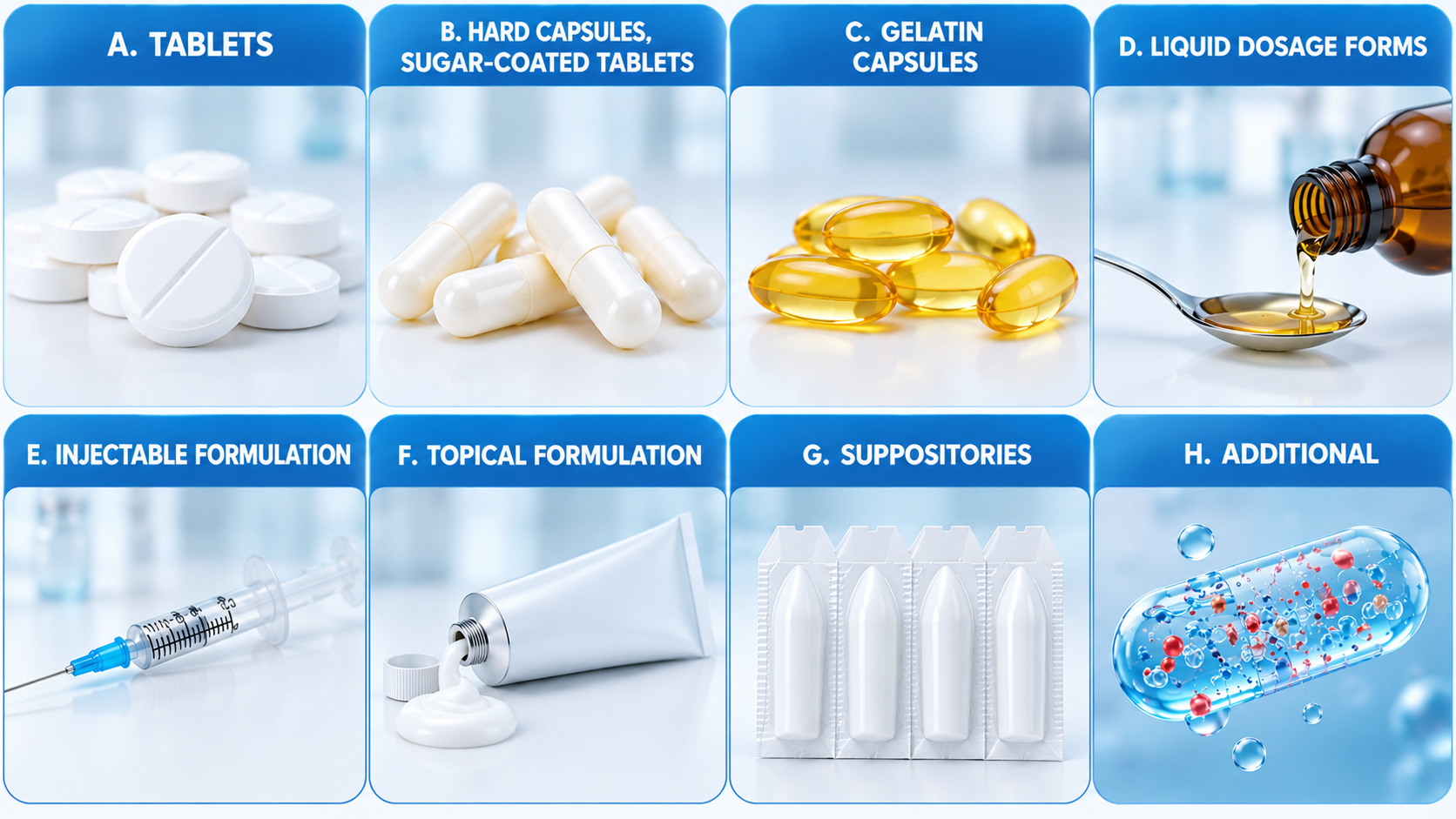
Oral pharmaceuticals:
Tablets: Lubricant and anti-sticking agent for punches and dies
Hard capsules and sugar-coated tablets: Agent that helps increase the intestinal absorption of active ingredients
Softgel capsules: Oil carrier for the fill formulation, providing energy and improving the solubility of poorly soluble active ingredients
Liquid formulations: MCT oil is used in emulsions, microemulsions, self-emulsifying systems, solutions, and suspensions containing active ingredients that are unstable or poorly soluble in water, such as Calciferol
Parenteral pharmaceuticals: Solubilizing agent for lipophilic drug substances in oil-based injectable solutions, emulsions, and injectable suspensions, helping improve the solubility and absorption of active ingredients
Topical pharmaceuticals: Oil-based vehicle for topical preparations, improving the solubility and bioavailability of lipophilic active ingredients
Suppositories: Base for suppositories
Used as an alternative antimicrobial agent in pharmaceutical formulations
3. Advantages of MCT Oil in Pharmaceutical Formulations
Acts as a solvent for lipophilic active ingredients in pharmaceutical formulations, helping improve solubility and increase the bioavailability of active ingredients
Stable against oxidative agentssuch as light and atmospheric oxygen
Chemically inert, with no incompatibility with other active ingredients and excipients
Contains no antioxidants, residual solvents, or catalysts
High active ingredient loading capacity
Due to its shorter chain length, it israpidly metabolized and absorbed in the digestive system, helping increase the bioavailability of active ingredients
For softgel capsules: The use of MCT oil in the fill formulation helps reduce the risk of cross-linking in the capsule shell, which can cause shell hardening, leakage, and difficulties in shell disintegration
For topical preparations: The use of MCT oil helps improve the spreadability of the formulation on the skin without affecting the skin's respiratory function, facilitating effective delivery of active ingredients through the skin without causing dryness
The product has high purity and is manufactured through a strictly controlled process, thereby ensuring good and consistent product quality
4. Mechanism of MCT Oil in Reducing Cross-Linking in Softgel Capsules
The mechanism by which MCT helps reduce cross-linking in softgel capsules does not involve inhibiting the reaction between amino groups and carbonyl groups, which is the primary reaction responsible for cross-linking. Instead, it is attributed to the chemical inertness and purity of this material compared with other oils having the same HLB value of 1. Some properties of MCT that help reduce cross-linking in softgel capsules are as follows:
a. Extremely Low Aldehyde and Peroxide Levels
Poorly refined vegetable oils often contain unsaturated fatty acids. Over time, these double bonds undergo oxidation to form hydroperoxides, which subsequently decompose into Aldehydes. These Aldehydes are the primary factors that interact with the gelatin capsule shell to form cross-links, resulting in cross-linking.
In contrast, MCT, typically consisting of C8 and C10 fatty acids, is composed of fully saturated fatty acids with no double bonds, making it highly resistant to oxidation. When MCT is used as a solvent for dissolving lipophilic active ingredients, the concentration of generated Aldehydes is nearly zero.
b. Moisture Content and Polarity
Cross-linking requires an aqueous environment to facilitate ionization reactions. MCT has low polarity and a lower moisture-absorbing capacity compared with polar solvents such as PEG 400:
When PEG 400 is used as a solvent, it tends to draw water from the capsule shell into the excipient or absorb moisture from the environment, increasing the rate of hydrolysis and cross-link formation, thereby increasing the risk of cross-linking.
MCT creates a hydrophobic barrier that maintains the physical and mechanical stability of the capsule shell and limits water migration from the shell, thereby reducing the risk of cross-linking.
c. Compatibility
MCT does not dissolve the gelatin capsule shell and does not penetrate the capsule shell structure as strongly as surfactants or strong organic solvents. This helps maintain the balance of the gelatin network and plasticizer:
When PEG 400 is used: PEG has a strong affinity for water and glycerin. It tends to draw glycerin from the capsule shell into the fill. As a result, the shell loses its plasticizer, becoming brittle and more prone to cracking.
When MCT is used: Glycerin is completely insoluble in MCT. Therefore, glycerin remains within the gelatin network of the capsule shell, allowing the shell to retain its flexibility and elasticity.
Learn about Ginkgo Biloba Extract standardized to 24% flavonoids and 6% terpene lactones, its active components, key characteristics, and applications in supporting cerebral circulation and memory.
Explore taste-masking film coating in pharmaceutical formulation, its mechanisms, advantages, disadvantages, and common polymers such as methacrylate copolymers.
Learn about HP-β-CD (Hydroxypropyl-β-cyclodextrin), a leading excipient for improving solubility and stability and reducing toxicity risks in injectable formulations.
Discover the application of Beta Cyclodextrin in improving solubility, increasing bioavailability, and effectively masking the bitter taste of herbal active ingredients.
Pure ethanol is an indispensable organic solvent in pharmaceutical manufacturing. Discover the outstanding applications and strict standards of pharmaceutical ethanol.
Learn in detail about sucrose excipients in pharmaceutical preparations. Explore the properties, advantages, and applications of sucrose in manufacturing tablets and liquid medications.
Biorich Group
Thông tin
Biorich Group provides raw materials and supply chain solutions for the pharmaceutical, nutrition, healthcare, cosmetics, food, and industrial sectors, with a global network of partners.
Main category
Loading...
Featured videos
Sign up to receive news
Sign up for our weekly newsletter to get the latest updates.
 (11).png)
 (12).png)