1. General introduction to Hydrogenated soybean oil
Hydrogenated Soybean Oil (HSO) is soybean oil that has been partially or fully hydrogenated to convert the carbon–carbon double bonds in unsaturated fatty acids into single bonds. The hydrogenation process enhances oxidative stability, increases the melting point, and transforms the liquid oil into a semi-solid or solid material at room temperature.
In pharmaceutical formulations, Hydrogenated Soybean Oil is widely used as a multifunctional lipid excipient in tablets, sustained-release dosage forms, capsules, suppositories, topical preparations, and various specialized drug delivery systems. It is highly valued for its chemical inertness, excellent lipid matrix-forming capability, and superior stability during both manufacturing and storage.
Pharmaceutical-grade HSO is typically produced from highly refined soybean oil and contains a high proportion of saturated fatty acids, predominantly stearic acid and palmitic acid, following the hydrogenation process.
2. Physicochemical properties of Hydrogenated soybean oil
Material Name: Hydrogenated Soybean Oil
Origin:Hydrogenated soybean oil
Country of Origin: China
Appearance: White to off-white solid or semi-solid
Odor:Practically odorless
Solubility: Insoluble in water; soluble in hot organic solvents.
Excipient Type:Lipophilic lipid excipient
Melting Point: Approximately 60–75°C, depending on the degree of hydrogenation.
Stability: Highly resistant to oxidation and hydrolysis.
Compatibility: Compatible with most active pharmaceutical ingredients (APIs) and commonly used pharmaceutical excipients.
Main Components:Primarily triglycerides of saturated fatty acids, including stearic acid, palmitic acid, behenic acid, and arachidic acid, derived from hydrogenated soybean oil.
3. Advantages of Hydrogenated soybean oil
Superior Oxidative Stability:Compared with conventional soybean oil, Hydrogenated Soybean Oil contains significantly fewer carbon–carbon double bonds, making it much less susceptible to oxidation. This minimizes peroxide formation, reduces product degradation, and helps extend the shelf life of pharmaceutical formulations.
Efficient Lipid Matrix Former for Sustained-Release Tablets: Hydrogenated Soybean Oil forms a robust lipid matrix that controls drug release by allowing the active ingredient to diffuse gradually through the lipid network, thereby achieving sustained-release performance.
Effective Lubricant: As a tablet lubricant, Hydrogenated Soybean Oil exhibits excellent compatibility with pharmaceutical ingredients, is free from metallic taste, and, when used at appropriate concentrations, generally has less impact on drug dissolution than magnesium stearate in certain formulations.
Excellent Biocompatibility: Hydrogenated Soybean Oil is a safe pharmaceutical excipient with low toxicity and minimal irritation, making it well suited for oral dosage forms.
Suitable for Melt-Based Manufacturing Technologies: Owing to its favorable thermal properties, Hydrogenated Soybean Oil is compatible with melt granulation and hot-melt extrusion processes.
Plant-Derived Excipient: Produced from soybean oil, Hydrogenated Soybean Oil meets the growing demand for plant-based ingredients in pharmaceutical, cosmetic, and food applications.
High Formulation Compatibility: Hydrogenated Soybean Oil is compatible with a wide range of oils, waxes, emulsifiers, and pharmaceutical excipients without compromising formulation stability.
4. Applications of Hydrogenated soybean oil
In pharmaceuticals
Tablets: Functions as an effective lubricant to reduce friction during compression, produce tablets with a smooth and glossy surface, and extend the service life of punches and dies.
Sustained-Release Tablets: Serves as a lipid matrix-forming excipient to control the release rate of the active pharmaceutical ingredient (API).
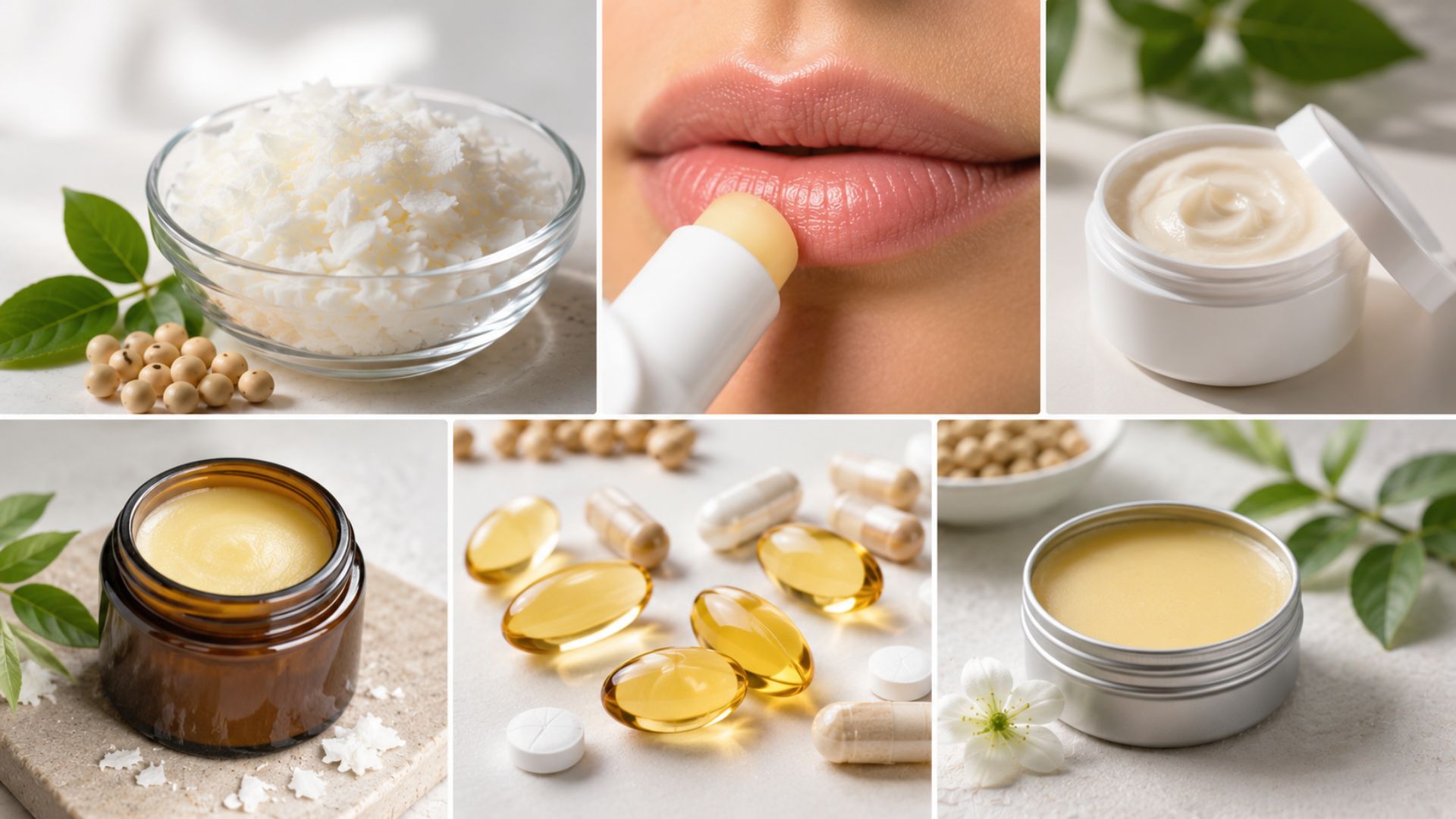
Soft Gelatin Capsules:Acts as a lipid carrier, viscosity modifier, and thickening agent while improving the physical stability of soft capsule fill formulations.
Topical Formulations: Functions as a viscosity modifier and structuring agent to provide stable and uniform formulations.
Suppositories: Used as a base-forming or thickening agent to improve the consistency and stability of suppository formulations.
Lipid-Based Drug Delivery Systems:Serves as a lipid carrier or matrix material to enhance formulation stability and support controlled drug delivery in specialized lipid-based systems.
In cosmetics
Lipsticks and lip balms: Improves hardness, structure, and product stability.
Skin care creams: Supports emulsion stability and texture enhancement.
Sunscreen formulations: Contributes to formulation consistency and long-term stability.
Stick-format cosmetics:Provides structural integrity and shape retention.
In food and dietary supplements
Dietary supplement tablets and capsules: Helps stabilize oxidation-sensitive ingredients.
Carrier systems for oil-soluble vitamins: Supports ingredient stability during processing and storage.
Specialized nutritional products:Improves lipid system structure and durability.
Confectionery and processed foods: Functions as a structuring and stabilizing ingredient.
5. Commercial products using Hydrogenated soybean oil
6. Product contact information
For technical documentation, COA, quality dossiers, samples, or formulation support regarding Hydrogenated Soybean Oil for pharmaceutical, cosmetic, and food applications, please contact:
Sample & COA Request: Contact the Biorich team for evaluation samples, quality documentation, and technical consultation tailored to your formulation development needs.
Biorich Group supplies Camphor - an active pharmaceutical ingredient (API) that helps relieve pain, prevent itching, and create a cooling sensation. Optimally applied in ointments, medicated oils, massage balms, and cosmetics. Contact us now to receive a sample and COA!
Ketoprofen Raw Material – International standard Active Pharmaceutical Ingredient (API), widely used in the formulation of analgesic and anti-inflammatory drugs. Contact Biorich now!
Chlorhexidine Gluconate – Highly effective antibacterial and surface antiseptic solution. Widely applied in healthcare and personal care. Contact Biorich now!
Biorich Group
Thông tin
Biorich Group provides raw materials and supply chain solutions for the pharmaceutical, nutrition, healthcare, cosmetics, food, and industrial sectors, with a global network of partners.
Main category
Loading...
Featured videos
Sign up to receive news
Sign up for our weekly newsletter to get the latest updates.




.png)
.png)
.png)
.png)
.png)
.png)
.png)