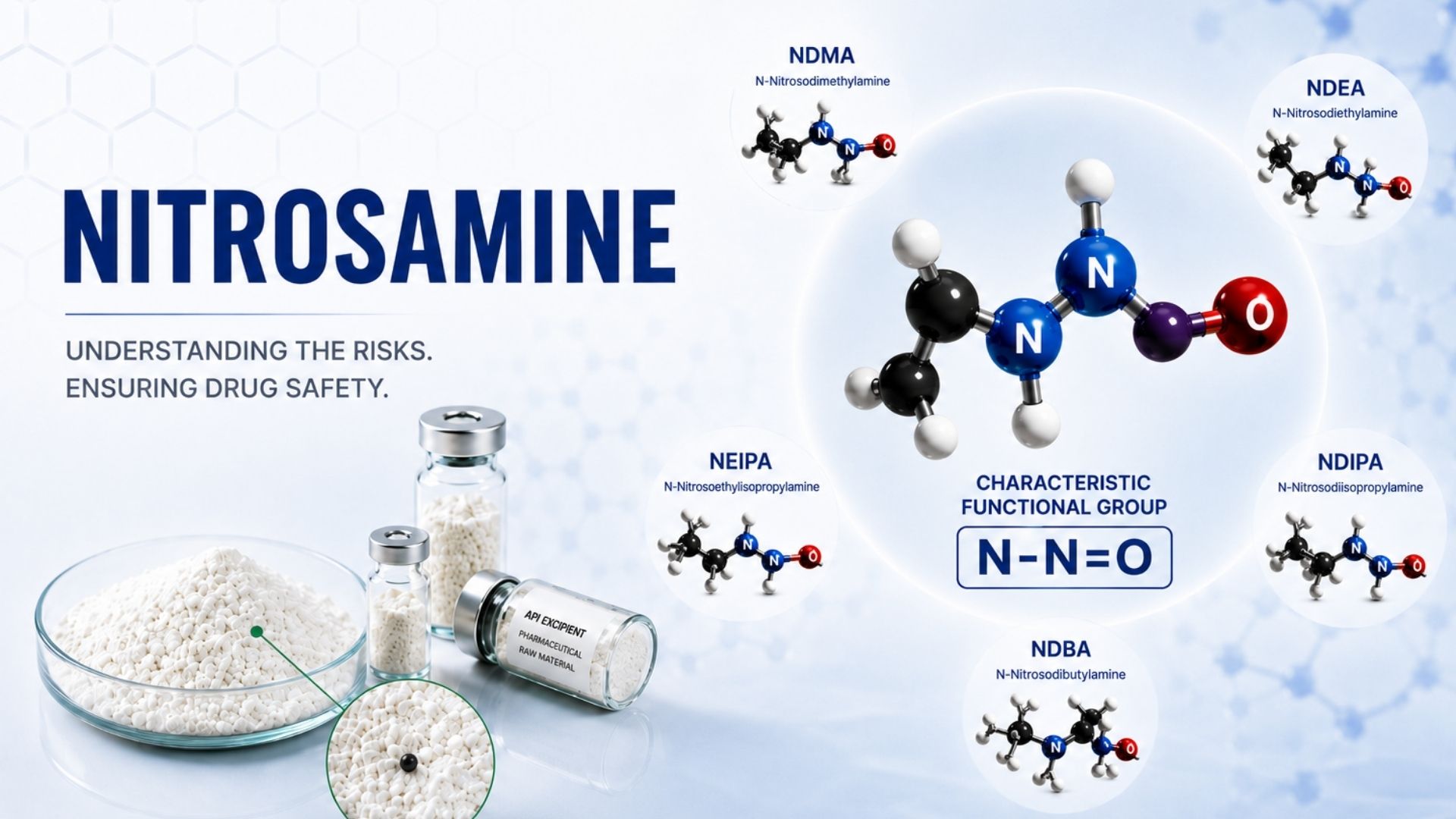
Nitrosamines are a class of compounds containing the N-nitroso functional group (-N–N=O). They are generally formed through the reaction of amines with nitrosating agents, particularly nitrite under acidic conditions.
Nitrosamines of pharmaceutical concern include:
Many nitrosamines are classified as mutagenic impuritiesand several have been identified as probable human carcinogens. Their presence in pharmaceutical products has become a major regulatory concern since the discovery of NDMA contamination in Valsartan products in 2018, which resulted in multiple product recalls worldwide.
Nitrosamine formation requires three fundamental elements:
In pharmaceutical manufacturing, nitrosamines are not intentionally introduced. Instead, they may be generated during API synthesis, excipient manufacturing, formulation, or storage.
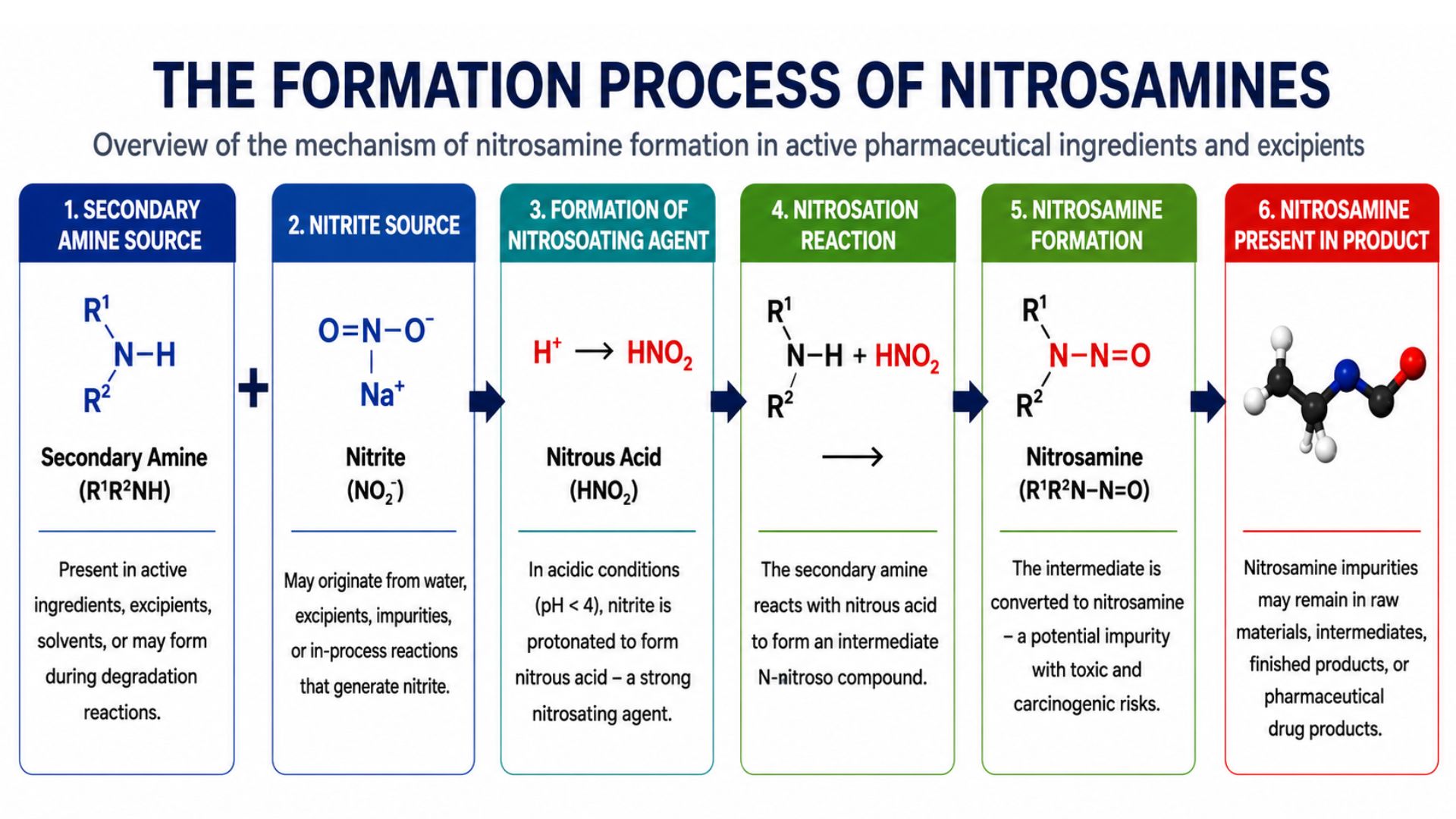
API manufacturing processes frequently involve amines, amide-containing reagents, or nitrite salts. When these substances are present simultaneously under favorable conditions, nitrosamines may form as process-related impurities.
Common precursors include:
For example: Dimethylamine + Nitrite → NDMA.This reaction pathway was identified as one of the primary sources of nitrosamine contamination in several sartan APIs.
Recovered or recycled solvents may contain residual amines or trace levels of nitrosamines. Without adequate purification and process control, repeated solvent reuse can increase nitrosamine levels during API manufacturing.
Trace nitrite may be introduced through: Purified water, inorganic reagents, pharmaceutical excipients, synthetic intermediates. Although typically present at ppm or ppb levels, nitrite impurities may react with susceptible amines over time to generate nitrosamines.
Certain APIs containing secondary or tertiary amine structures may generate nitrosamines during storage. Factors influencing degradation include: Elevated temperature, High humidity, Nitrite contamination. Nitrosamine formation through degradation has been reported for APIs such as Ranitidine and Nizatidine.
APIs containing secondary or tertiary amine functionalities generally present a higher risk for nitrosamine formation. Examples include: Metformin, Ranitidine, Nizatidine, Doxylamine, Varenicline, Valsartan, Losartan, Irbesartan
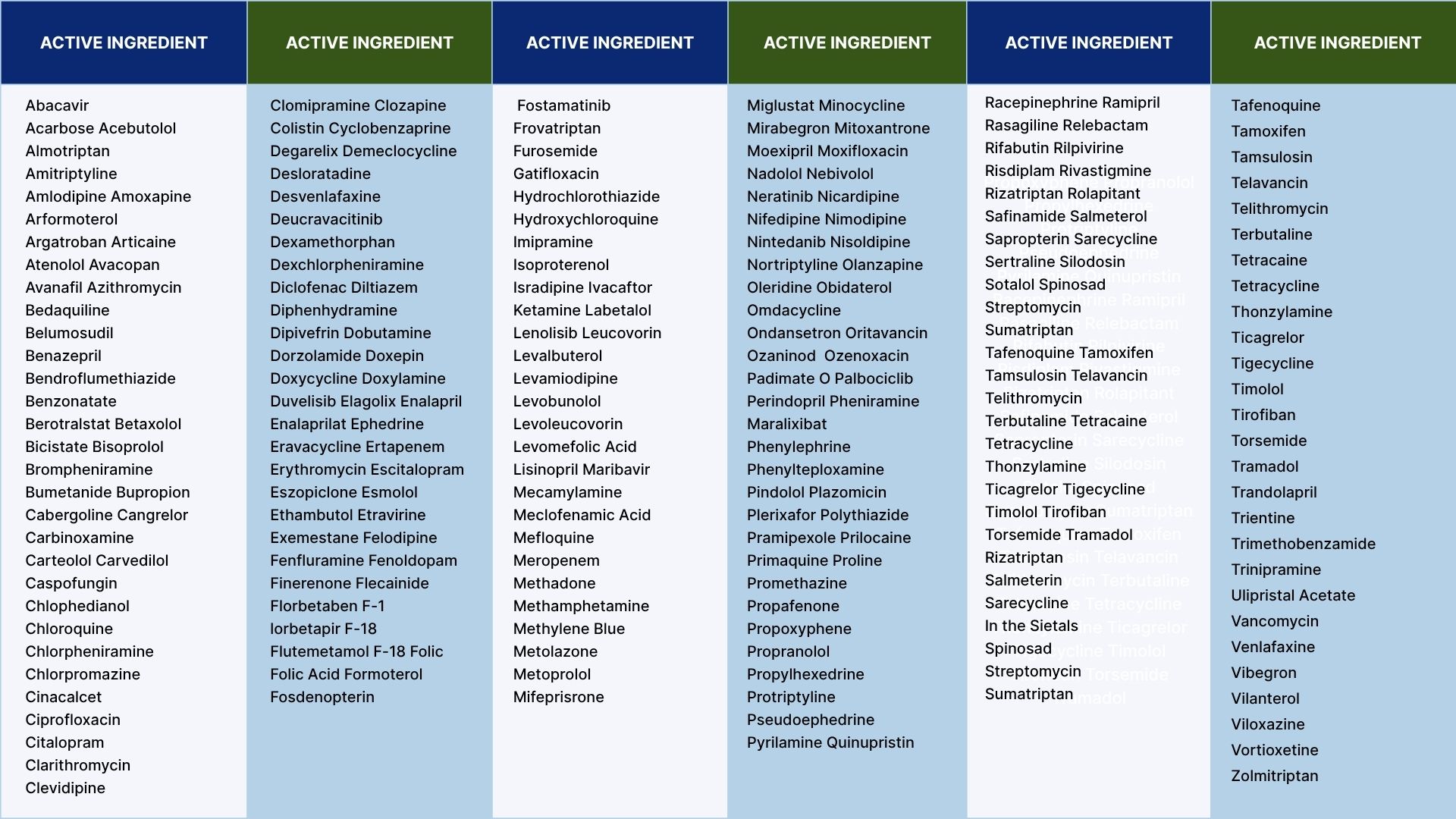
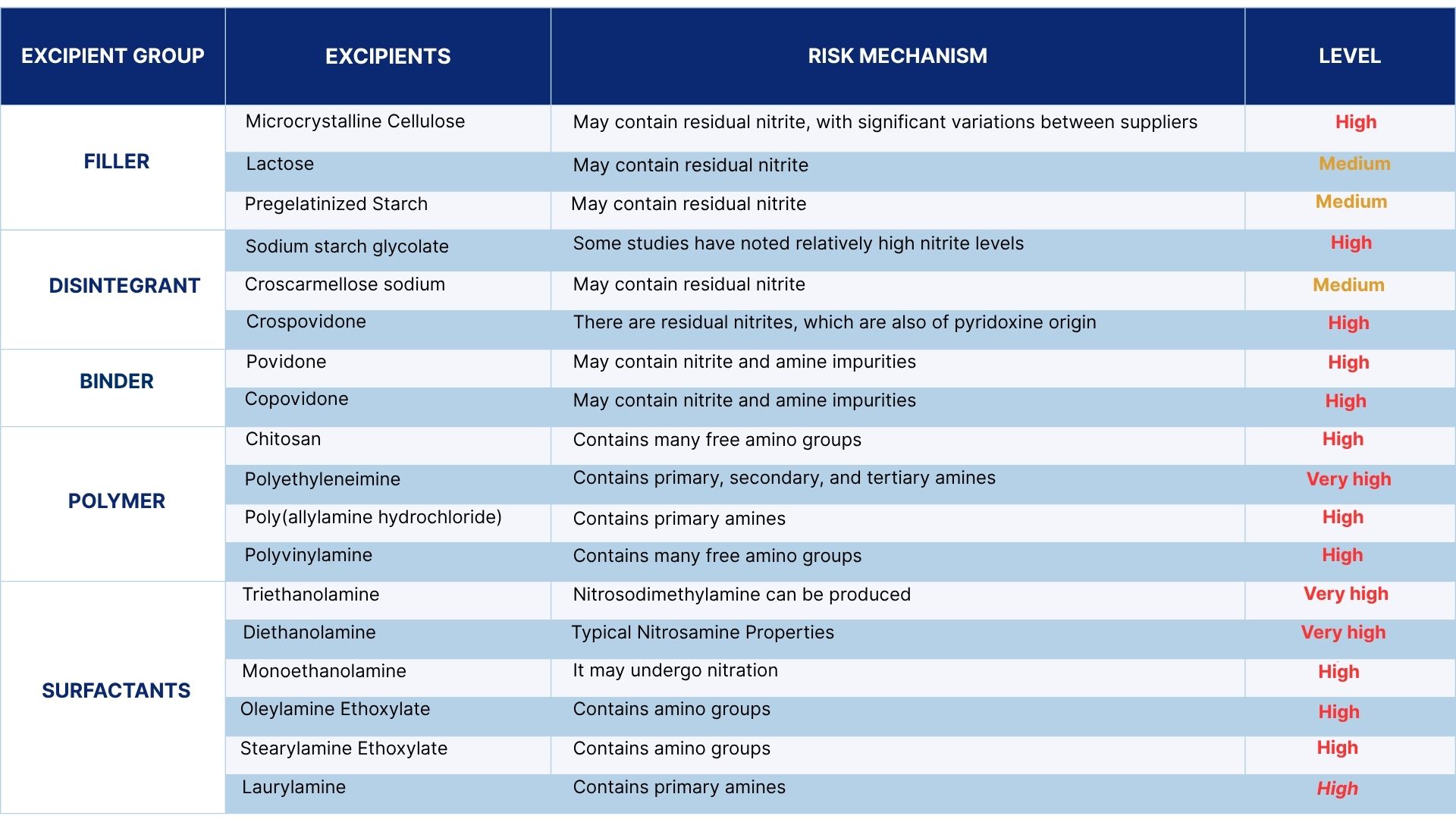
Although excipients are not typically direct sources of nitrosamines, some may contribute to nitrosamine formation. Potential risk factors include:
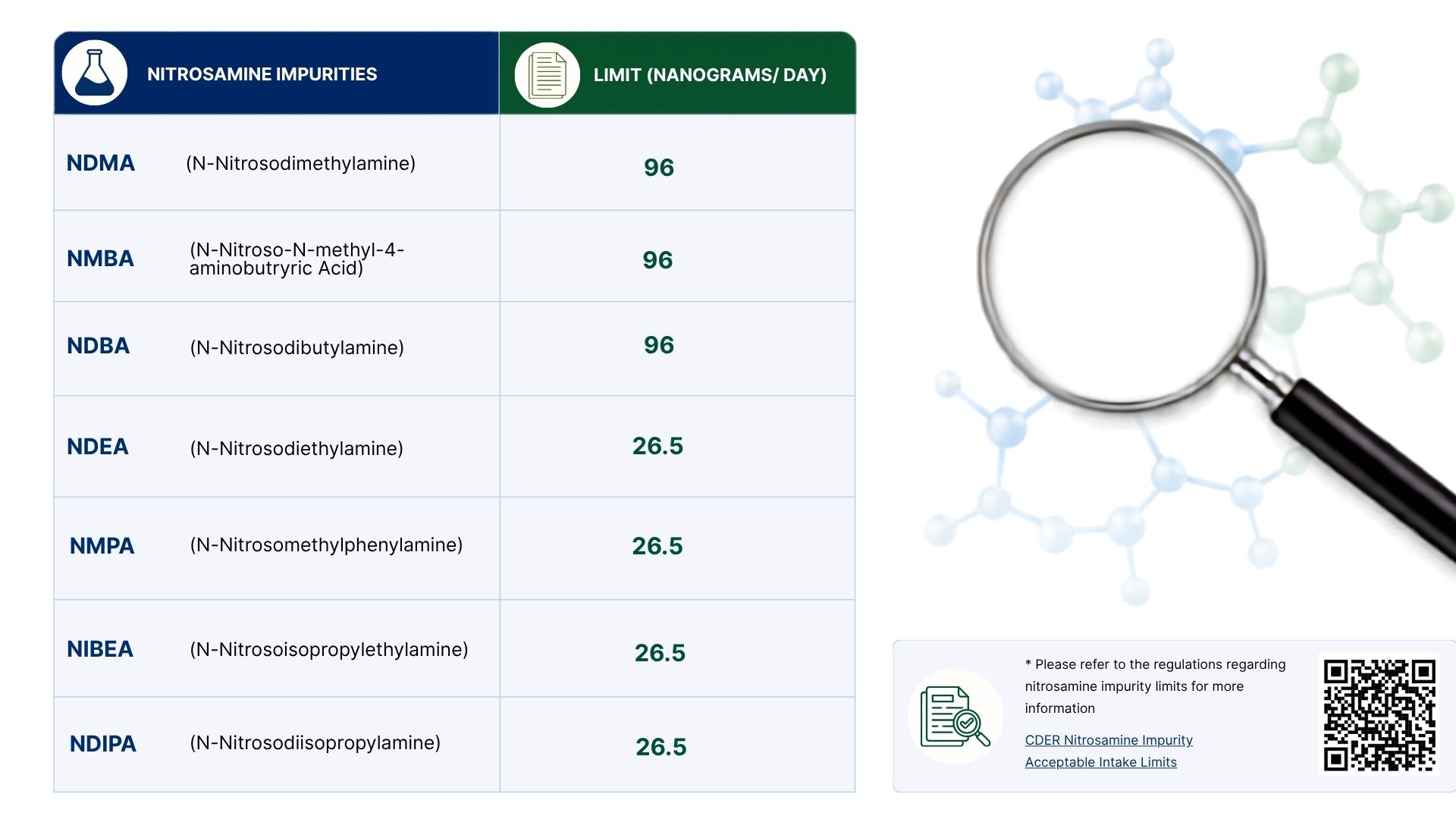
Global regulatory agencies, including the FDA and EMA, have established acceptable intake (AI) limits for nitrosamine impurities based on toxicological risk assessment. The acceptable intake limits for commonly encountered nitrosamines are summarized in the table below. Note: 1 ng = 10⁻⁶ mg. For the latest acceptable intake limits, refer to the CDER Nitrosamine Impurity Acceptable Intake Limitsguidance.